

There is a stack of finished paintings on the shelf in my spare bedroom, the room I turned into a studio after thirty-one years of teaching middle school art, and about a third of them are on the same paper. Not because I am loyal to a name. Because after eight years of painting on Arches blocks, I stopped losing whole mornings to paper that would not sit still. If you have ever watched a wet wash pull a sheet into a curl halfway through a sky, you know exactly what I am describing. That curl is not a technique problem. It is a paper problem, and it is the first thing I would change.
I paint at a folding table under a north-facing window, most mornings, about two hours at a stretch. My cat usually takes the warm end of the table. The block sitting there now is the Arches Cold Press Watercolor Block in 7 by 10 inches, 140 pound, 20 sheets. That is the size I reach for when I am painting for myself, landscapes and garden flowers mostly, and I go through roughly one block a month. I keep a cheap spiral student pad beside it for practice sketches and class demonstrations. The difference between those two stacks of paper is the whole reason I am writing this.
The Quick Verdict
Holds a soaking wet wash dead flat with no tape and no stretching, and takes repeated lifting better than any paper I have used. The glued edge is the trade you make for that, and it is a fair one.
Amazon Check Today's Price →The paper I reach for before I have decided what I am painting
Cold press, 140 pound, 7 by 10, 20 sheets glued on all four sides. No tape, no board, no soaking and stretching before you can make a mark.
Amazon Check Today's Price on Amazon →How I've Used It
I have painted on Arches blocks for about eight years, and I have settled into a routine with them. The block is glued on all four sides, so the top sheet is held flat by the block itself while it dries. I paint on that top sheet and then leave it alone until it is completely dry, which sometimes means until the next morning. Then I slide a palette knife around the edge, work it under a corner, and lift the sheet off. The first time you do this you will be convinced you are about to tear it in half. You are not, as long as the paper is truly dry.
Twenty sheets sounds like a generous amount until you are painting most mornings. I am not producing twenty finished paintings a month. Some sheets get a color study, some get a value sketch, and a few get abandoned at the halfway point because I lost the light or lost my patience with a tree. A block lasts me roughly a month. That rhythm suits me, and it means I am never hoarding paper, which is its own trap for a hobby painter. Use it. That is what it is for.
My comparison point is the cheap spiral student pad I keep on the same table. I use it for sketches and for anything I need to demonstrate twice in a row at the Thursday beginner class I teach at the library. On that pad, a wet wash starts to buckle the sheet within a minute. On the block, it simply sits there. That is the entire difference in one sentence, and it is worth more than any description of texture I could give you.

What the Cold Press Surface Does to a Wash
Cold press has a light texture, and that texture is doing more work than most people realize. Run a loaded brush across it and the pigment settles into the little hollows of the grain while the tops of the grain stay a touch lighter. That is where the sparkle in a good wash comes from. It is also why the same pigment looks deeper here than it does on a smooth plate finish. The surface reflects light back up through the transparent layers of paint instead of swallowing it, which is the difference between color that glows and color that goes flat and dusty.
The other thing the surface gives you is time. A wash on this paper stays workable long enough that you can tilt the block, pull a bead down the page, and still catch it at the bottom before it sets. On a softer student sheet, by the time I have tilted and picked up my brush again, the edge has already started to dry into a hard line I did not want. If you have ever tried to soften an edge and made a muddy ghost of it instead, that is the difference I am describing, and it shows up on the very first wash.
What it will not do is rescue a drawing. It will not make you a better painter, and I want to be plain about that because I taught twelve-year-olds for three decades and I have heard every version of the wonder-supplies speech. What good paper does is stop working against you. It gives you a fair test of whatever you actually did with the brush, which is a smaller promise than it sounds and the only one that matters. Nobody ever improved because of a block. Plenty of people quit because of a bad pad.
Lifting, Backruns, and a Mistake I Keep Making
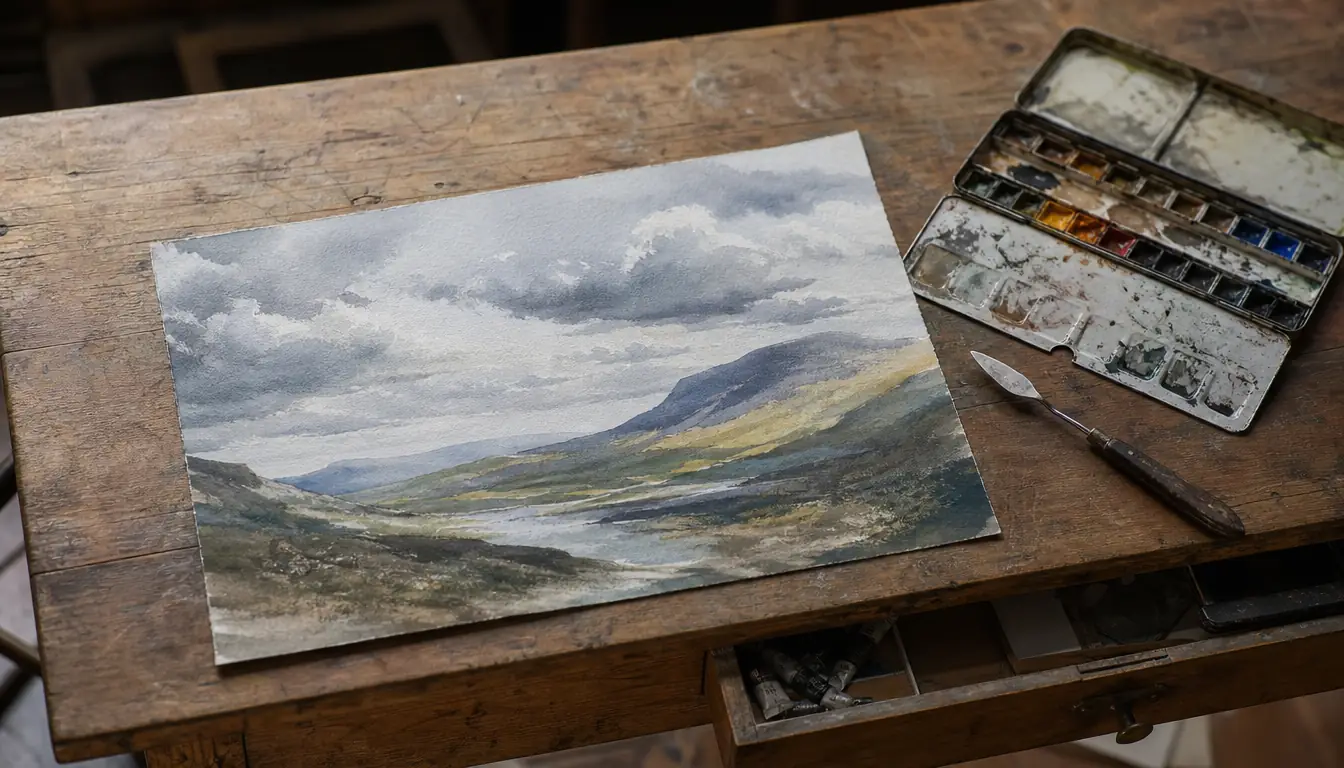
Lifting is where this paper earns its keep for me. Once a wash is fully dry, a damp brush and a light touch will take the color back up to near the original tone of the sheet, and the edge of the lift stays soft instead of going chalky. I have scrubbed a dried ultramarine sky with a stiffened brush and a damp sponge and had the surface come back without pilling into a gray mess. I would not make a habit of that. But knowing I can rescue a sky is the reason I now paint skies without flinching.
Backruns are the other side of the same coin. A backrun happens when wet paint pushes into an area that is damp but not wet, and the pigment gets shoved out to the edge of the puddle. On some paper the result looks like a stain you cannot fix. Here it blooms with a clean, cauliflower edge that you can either keep on purpose or soften while it is still damp. I have come to use them deliberately in the foliage behind the garden fence. That is not a technique I could have built on a pad that turned every bloom into a muddy patch.
My own repeated mistake is impatience. I try to lift a wash before it has gone fully matte, and what comes up is a pale smear with a soft gray ring around it, not the clean patch I was after. Every single time. The paper is not at fault. The fix is to walk away from the table for twenty minutes and let it finish drying, and I am telling you this because a beginner will blame the paper, buy something else, and make the same mistake on the new block within the week.
The Glued Block, and What Tub Sizing Does
The block is glued on all four sides, which does two things at once. It holds the sheet flat while it dries, and it means you never tape anything down. I spent years taping sheets to a board and soaking them first, and I do not miss the twenty minutes of setup one bit. The trade is that you cannot paint across the full sheet until you cut it loose. At 7 by 10 that has never bothered me. The working area inside the glued margin is small, so I simply plan the painting for the space I have.
There is also something happening inside the paper that I did not understand for the first few years I painted. Arches papers are cylinder mould made, as they have been for over a century, and each sheet is tub-sized in a bath of pure natural gelatin and then air dried. Sizing is what keeps the paint sitting up on the surface instead of sinking straight into the fibers. That is why a lift actually lifts, and it is a large part of why the colors stay bright instead of going dull and sunken once they dry.
You can feel it the moment you wet the sheet. The water beads and sits for a second before it soaks in, and when you brush over the same spot a second time the surface has not gone soft and fuzzy the way a student sheet does after a few passes. I noticed that difference years ago and had no idea what caused it. Now I do, and it explains a good deal of the frustration I had early on with cheaper paper and the terrible advice I gave myself about needing a better brush.
Twenty Sheets, One Month, and the Honest Tradeoff
Twenty sheets at 140 pound is a real stack, and at 7 by 10 it is heavy enough to feel substantial in the hand. The listing puts the whole block at 14.4 ounces, which means it travels well in a tote if you carry it to a class. Mine goes to the library on Thursdays and has never been damaged in transit. The sheets are 300 GSM, which is the weight I recommend to anyone who intends to paint wet washes rather than dry brush work, and it is the weight that forgives a beginner's overwatering.
The honest tradeoff is release. Every sheet has to be cut free, and if you are impatient and pull before the paper is dry you will get a wavy edge that never quite flattens out again. I keep my finished sheets in a flat drawer, because a loose sheet of this weight will hold a curl if you stand it on end. If you do not have somewhere flat to store loose paper, plan for that before you buy a block. Once a sheet is off, it does not go back on.
What I Liked
- Holds a soaking wet wash flat with no tape, no board and no stretching
- Takes repeated lifting and gentle scrubbing without pilling into gray
- The cold press grain gives washes depth and keeps the color transparent
- Cylinder mould made and tub-sized in natural gelatin, so paint sits up and stays workable
- 20 sheets at 300 GSM, which is about a month of morning painting for me
- Travels to class without bending
Where It Falls Short
- You lose the glued margin of every sheet until you cut it free
- Release takes a palette knife and a fully dry sheet, no shortcuts
- A block only lasts me about a month
- 7 by 10 inside the glued edge is a small working area
- Not the paper I would hand a total beginner who is still deciding whether they like watercolor
I have scrubbed a dried ultramarine sky with a stiffened brush and a damp sponge and had the surface come back without pilling into gray. That is most of the review, really.
Who This Is For
If you have been painting watercolor for a year or two, you have probably reached the point where the paper is the thing standing between you and the painting you can see in your head. You know how to load a brush. You know what a wash is supposed to look like. You are just tired of fighting the sheet. This block is for that painter. It is also for the hobby painter in their fifties or sixties who gets two hours a morning and wants those two hours to count for something. My Thursday class is mostly adults who came back to art after decades away, and the ones who move up to a block like this stop asking me why their skies buckle.
Who Should Skip It
If you have never painted a watercolor in your life, buy the cheap pad and use it up first. Learn what a wash does and what your brush does before you spend on paper that deserves better than a first attempt. Skip it too if you like to work big, because 7 by 10 inside a glued margin is a small window, and there is nothing wrong with buying full sheets and tearing them down to the size you actually want. And if you paint once a month rather than most mornings, a block will sit there while your skills cool off. Get a pad you are not afraid to waste.
When the paper stops fighting you, the wash starts behaving
Cold press, 140 pound, 300 GSM, 20 sheets glued on all four sides. The block I have gone through roughly one of a month for eight years, at a folding table under a north window.
Amazon Check Today's Price on Amazon →