
The first thing I do at the start of every Thursday class is take the paint away from people. Not permanently. Just long enough to show them what their own set has been doing to them.
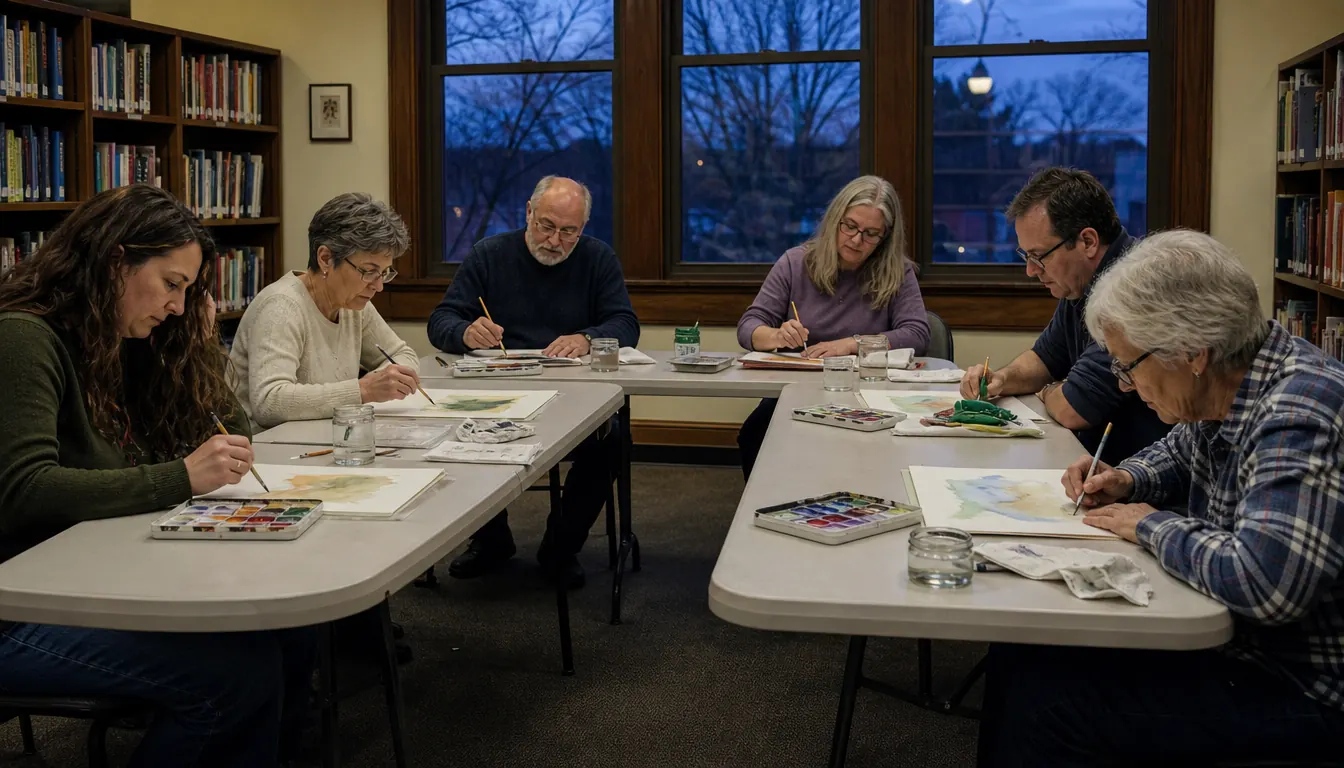
Six adults, most of them past fifty, nearly all of them convinced they cannot paint. They come to the library branch with a small pan set from a craft store and a spiral pad, and by the second week the same three things have happened. The greens go grey. A wash dries with a hard edge exactly where they wanted it soft. And the paper buckles, which makes the whole evening feel like a mistake.
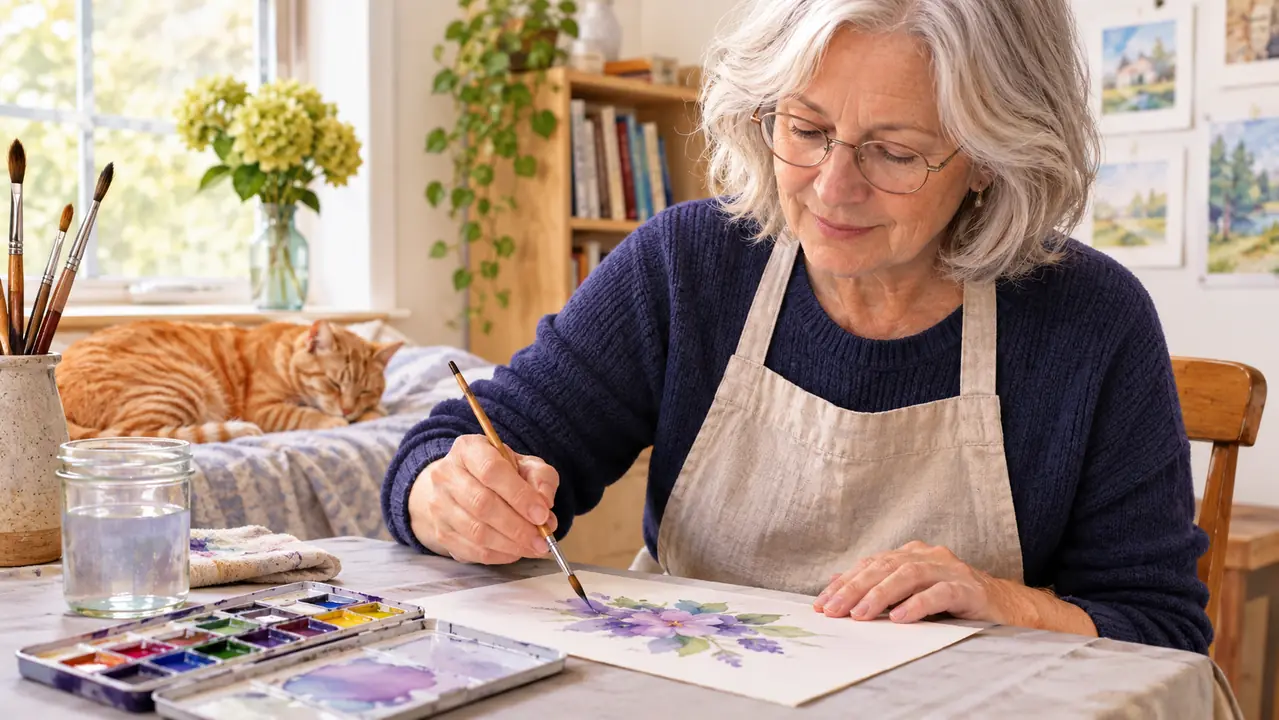
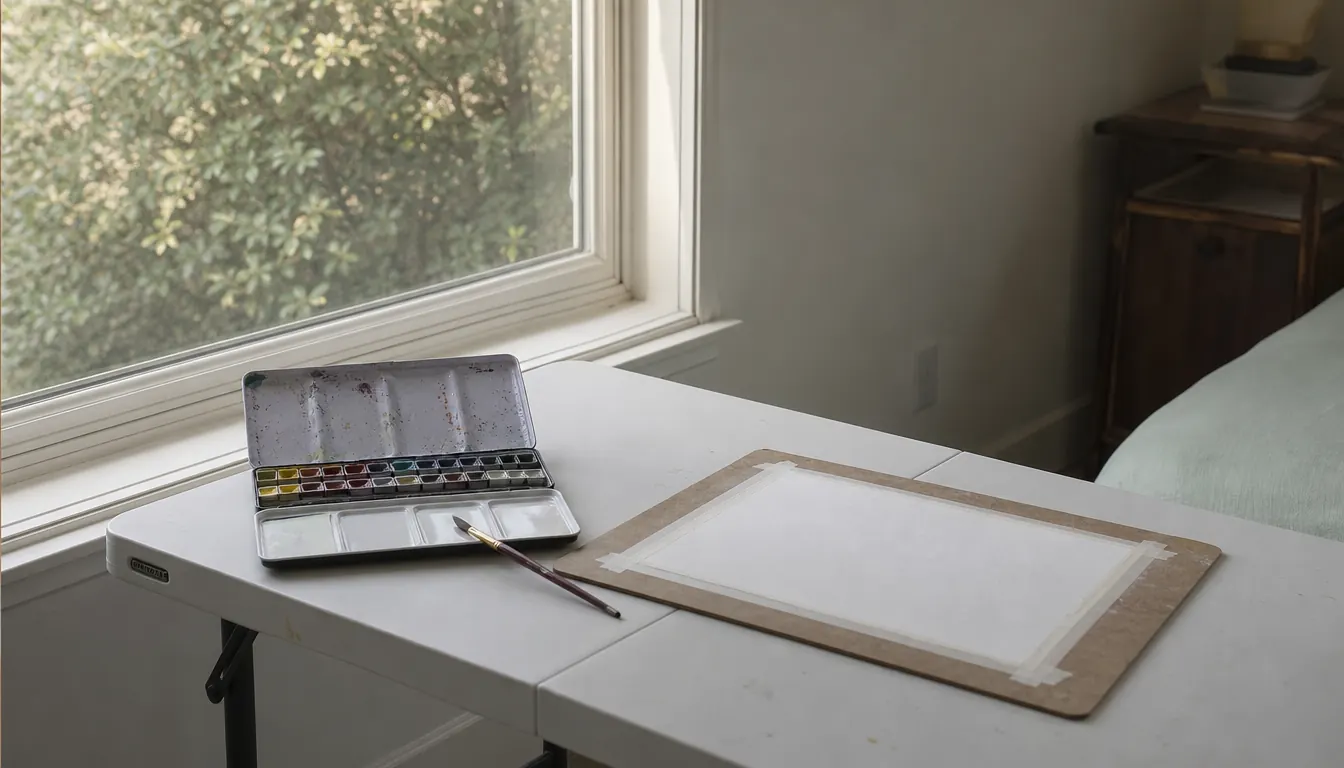
So I put my own box on the table and make them try again with it. It is a Winsor & Newton Cotman 45 Half Pan Studio Set, and I have painted out of one for about three years, most mornings, at a folding table in the spare bedroom with the north light coming in.
The difference is not talent. It is how much pigment sits in the pan and how cleanly that pigment lets light through. Cotman colours have excellent tinting strength, which sounds like a catalog phrase and is the plainest thing about them. A little paint on a wet brush goes a long way, so a wash stays thin. Thin washes are the whole game. Thick ones dry chalky and flat, and no amount of brushwork rescues them.
They also have good transparency, which is what lets one wash sit over another and still read as two. Lay a pale yellow over a dry blue and you get green. Lay a heavy opaque paint over the same blue and you get mud with a green intention.
The third thing, and the one I spend the most class time on, is the mixing tray. The set is a compact case with a mixing tray, and that tray is most of the reason I hand it to beginners. People stab a wet brush into a pan, pick up far too much, then try to thin it out on the paper. That is how you get a bloom in the middle of a sky you were proud of. Mix in the tray. Test on a scrap. Then commit.
People stab a wet brush into a pan, pick up far too much, then try to thin it out on the paper. That is how you get a bloom in the middle of a sky you were proud of.
The box that goes on the table before anyone touches the good paper
Forty five half pans, a mixing tray built into a compact case, and pigment that stays thin under a wet brush. This is what I have painted with nearly every morning for three years, and the set I put in front of every nervous beginner on the first night.
Amazon Check Today's Price on Amazon →What I did not expect, three years in, is that the working properties would matter to me more than the colour count. A wash stays open long enough to be moved. If I lay a sky and decide the horizon is too high, I can lift it with a damp brush and a paper towel and the sheet underneath is still paper. Some pans grab the surface and refuse to let go. These let go. They also rewet after weeks of sitting dry. I have misted a pan on a Tuesday morning and had usable paint inside a minute.
Forty five colours is more than a beginner needs. I say that out loud in the first class, because I would rather they hear it from me than work it out alone. But the number is not the point. The point is that when a student asks what to use for the shadow on a white flower, I can open the Winsor & Newton case and find three answers without hunting. My old twelve pan tin ran out of options by the third week, and I spent more time mixing substitutes than painting.
Two years ago I bought a less expensive half pan set, a Mungyo, for the class supply bin so nobody would have to share mine. It does the job for a demo. The pans are smaller, the colour lifts less cleanly, and I reach for more paint to get the same depth on the sheet. I am not going to call it bad. I am telling you that when a student uses it and then uses mine, they can feel the difference in the first wash.
The case travels well. I carry it to the library branch in a tote with a sketchbook and a water bottle, and at just over fifteen ounces it does not pull on my shoulder the way a wooden palette box does. Half pans rather than full pans is the reason it stays light. For someone painting two hours a morning, a half pan lasts a long while.
If I have one complaint, it is that a tray inside a compact case is not a large tray. On a morning when I am mixing four washes for a landscape, I run out of clean space, wipe a corner dry with a paper towel, and start over. A beginner working on a small sheet will likely never notice. I notice about once a week.
What I'd Tell You If We Were Sitting at My Kitchen Table
Buy the box, then buy one thing at a time after it. A block of good cold press paper will change your painting more than any paint will, and it pains me to say that because paper is not as much fun to open. Use the tray. Rinse the brush and reshape the point before you set it down, because a brush that dries out of shape does not come back. And never leave an open palette on a table with a cat in the house. My cat walked through mine and tracked blue across a finished painting. That is a hard thing to lift.
None of this will make you a painter. I have been at watercolour twenty two years and I still ruin skies. What a decent set does is stop you wasting your two hours on problems that are not yours. When the paint is strong enough and clear enough and the tray is big enough to mix in, the mistakes left on the paper are your own, and those you can learn from. That is all any supply can honestly offer. It also happens to change an evening completely. The Winsor & Newton half pans are the ones I reach for, and the ones I hand out on a Thursday.
Start with the box, not the whole art store
One case, forty five half pans, a mixing tray, and nothing else to buy before your first wash. It is what I paint with most mornings and what I hand to every beginner who walks into the library branch on a Thursday night.
Amazon Check Today's Price on Amazon →