I bought my first Pentel Aquash four years ago for one reason. I wanted to paint at the park without carrying a jar of water. I was sixty then, still teaching middle school art, and my back had opinions about hauling a tote bag full of supplies. The brush went into a zip pouch with a pocket sketchbook and a few half pans in an old mint tin. It has stayed there ever since.
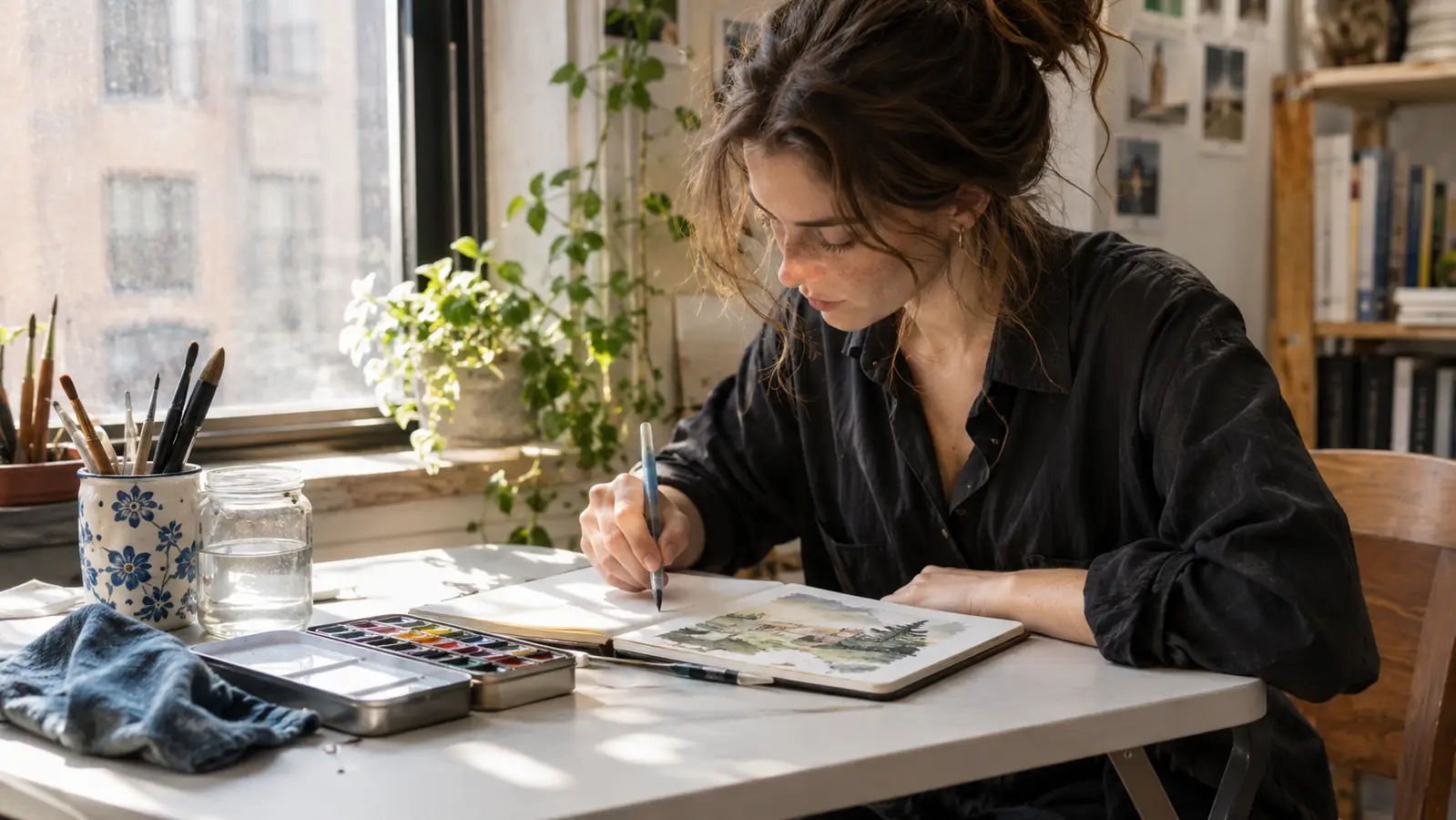
Here is what I did not expect. The brush changed how long I could sit with a painting. At my folding table by the north window, I usually have two hours in the morning. With a traditional brush and a water jar, I spend a fair amount of that time managing the water. Rinsing. Drying. Rinsing again. With the Pentel, I squeeze the barrel, wet the tip, and keep going. That sounds small. It is not small when your painting time is the first two hours of the day.
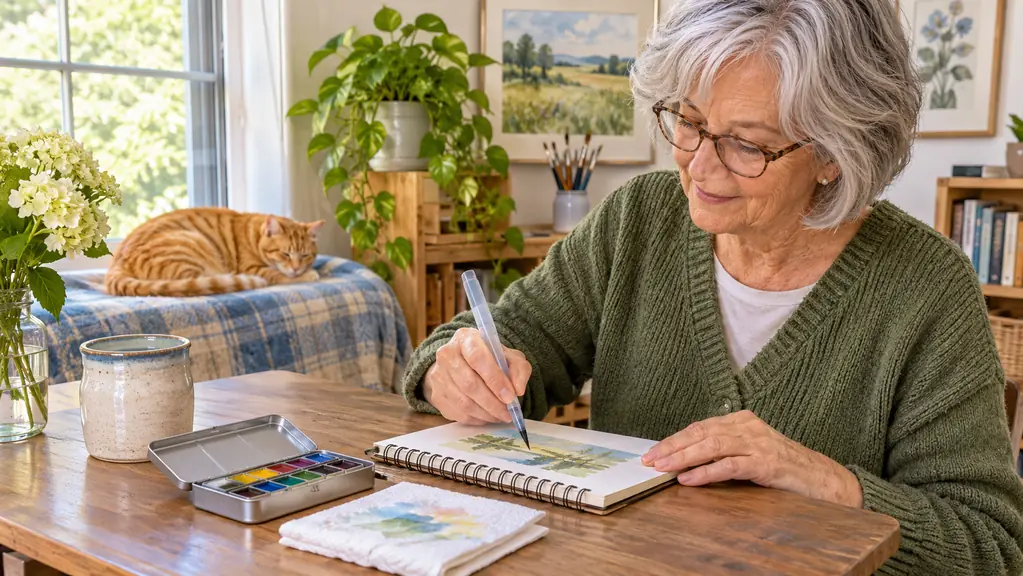
The first week I used it, I made a mess. I squeezed too hard and sent a bead of water running across a sky I had just laid down. The wash lifted in a streak. I sat there looking at it, annoyed, while Biscuit slept on the warm end of the table. Then I blotted the streak with a paper towel and painted back over it. The paper forgave me. The brush forgave me too, once I learned to squeeze gently and keep a paper towel under my hand.
That is the whole trick, really. Fill the barrel with plain water. Squeeze gently. Touch the tip to the paper or to a half pan. The water comes through the nylon bristles and the color moves. For a beginner, this is easier to control than a loaded round brush and a puddle of water, because the water is inside the handle and comes out only when you ask for it. My Thursday class at the library has six adults, most of them new to watercolor. The ones who borrow a water brush for a session tend to stop flooding the paper by the second hour.
I still use my Transon rounds for big washes at home. A water brush is not a replacement for a full setup. It is a different tool for a different job. But for the job I actually do most days, a small sketchbook and a brush that carries its own water, it is the tool I reach for first.
The water is inside the handle and comes out only when you ask for it. That is the whole difference.
The brush that lives in my zip pouch
The Pentel Aquash medium tip is the one I have carried for four years. Fill the barrel, squeeze gently, and paint. If you want a water brush for a sketchbook or a park bench, start here.
Amazon Check Today's Price on Amazon →On Arches cold press, the medium tip holds a pointed edge for stems and a broader side for small washes. I can drop water into a damp wash to make a bloom, or leave it alone and let a backrun form. A water brush gives you a softer, more controllable amount of water than a dip brush. The blooms are smaller. The edges dry sooner. If you are after a huge wet sky, use a big round and a spray bottle. If you are after a flower head on a 5 by 7 page, the medium tip is plenty.
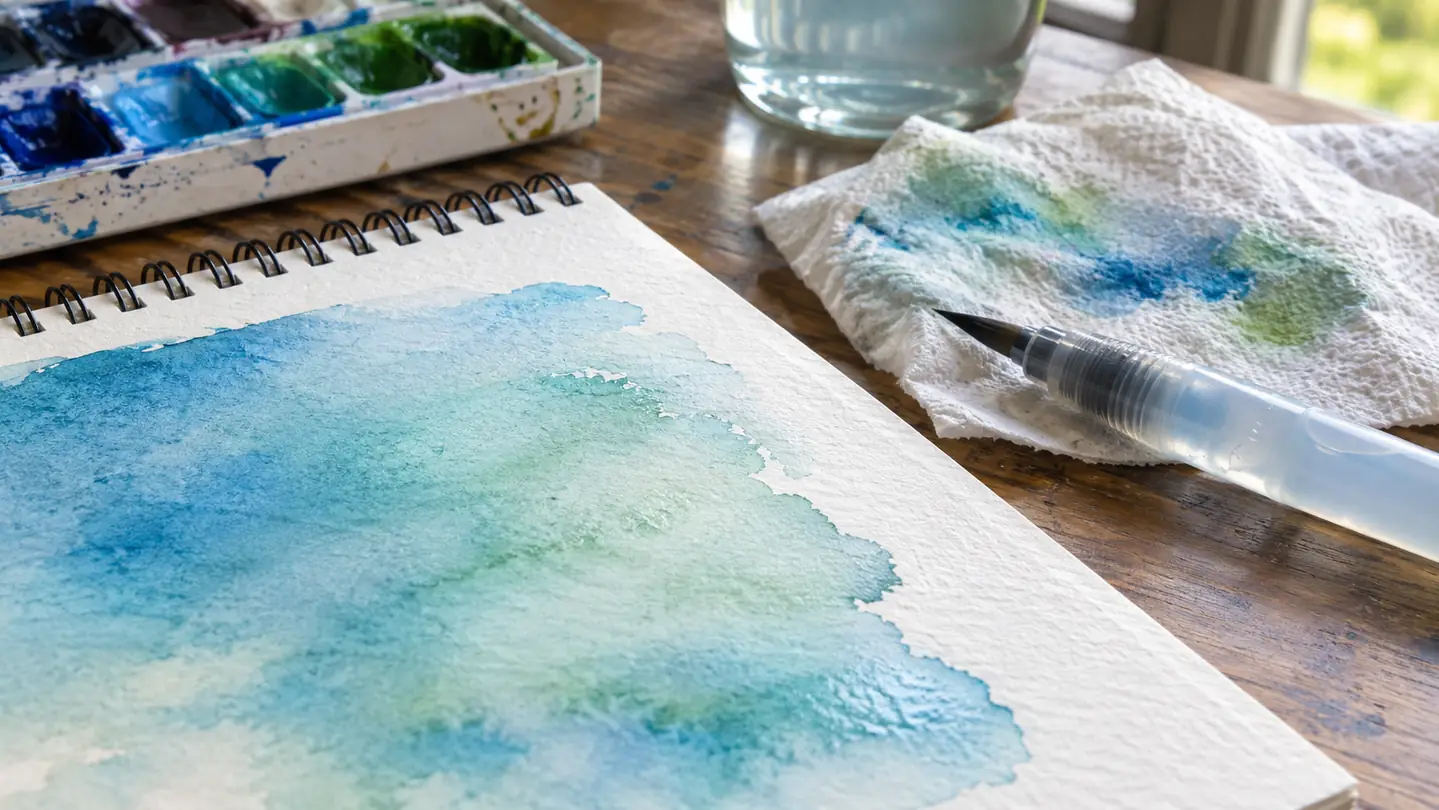
Changing colors takes one paper towel. Squeeze, wipe the tip, touch the next pan. I keep a folded towel in the pouch. At home I use a rag. On a bench I use the back of my hand, which my sister in Hagerstown finds funny. The brush does not need a jar, so there is nothing to tip over. That matters more as I get older and paint in places that are not my studio.
I tried a Zebra water brush once, when a student left one on the table after class. It did the same basic job. I only used it for one session, so I cannot say much beyond that. What I can say is that the Pentel has survived four years in a zip pouch, a few drops on a library floor, and one cat who thinks the table is his. The nylon tip still comes to a point when I reshape it with my fingers. That is the test I care about.
What it does not do: big washes, heavy granulating pigments, or anything that needs a lot of water fast. The barrel holds enough for a sketchbook session, not a full sheet. If you paint standing up with a board and a spray bottle, keep your rounds. If you paint on the couch, on a train, or at a picnic table, the water brush earns its place.
Last month I took the pouch to my sister's kitchen in Hagerstown. She had a vase of zinnias on the counter. I painted two small studies while the coffee went cold. No jar, no spilled water, no excuse. I tell my Thursday class the same thing every week. A tool will not make you a painter. Miles of paper will. But a tool can remove a small friction that keeps you from starting. The water brush removes the water jar. That is all it does. For some people, that is enough to get them painting on a Tuesday afternoon instead of waiting for a perfect setup.
What I'd Tell You If We Were Sitting at My Kitchen Table
If you came over for coffee and asked me whether to buy one, I would say this. Get the medium tip. Put it in a bag with a small sketchbook and three or four half pans. Fill it with plain water before you leave the house. Do not expect it to behave like your favorite sable. Expect it to be a patient little brush that lets you paint for twenty minutes in a waiting room. If you hate it after a month, you have lost very little. If you are like me, it will be the brush you reach for when the light is good and you only have a few minutes.
A small brush for the twenty minutes you actually have
The Pentel Aquash medium tip has been in my zip pouch for four years. It is not a full studio. It is the reason I still paint on days when I would otherwise skip it.
Amazon Check Today's Price on Amazon →