The first time I took a water brush out of the house, I flooded it. I squeezed the barrel the way you squeeze a toothpaste tube, the nylon tip let go of a bead of water all at once, and a small lake appeared exactly where a treeline was supposed to go. That was about four years ago, with a Pentel Aquash medium, and I still carry one. I am just more careful about the squeeze now, and about where I point it.
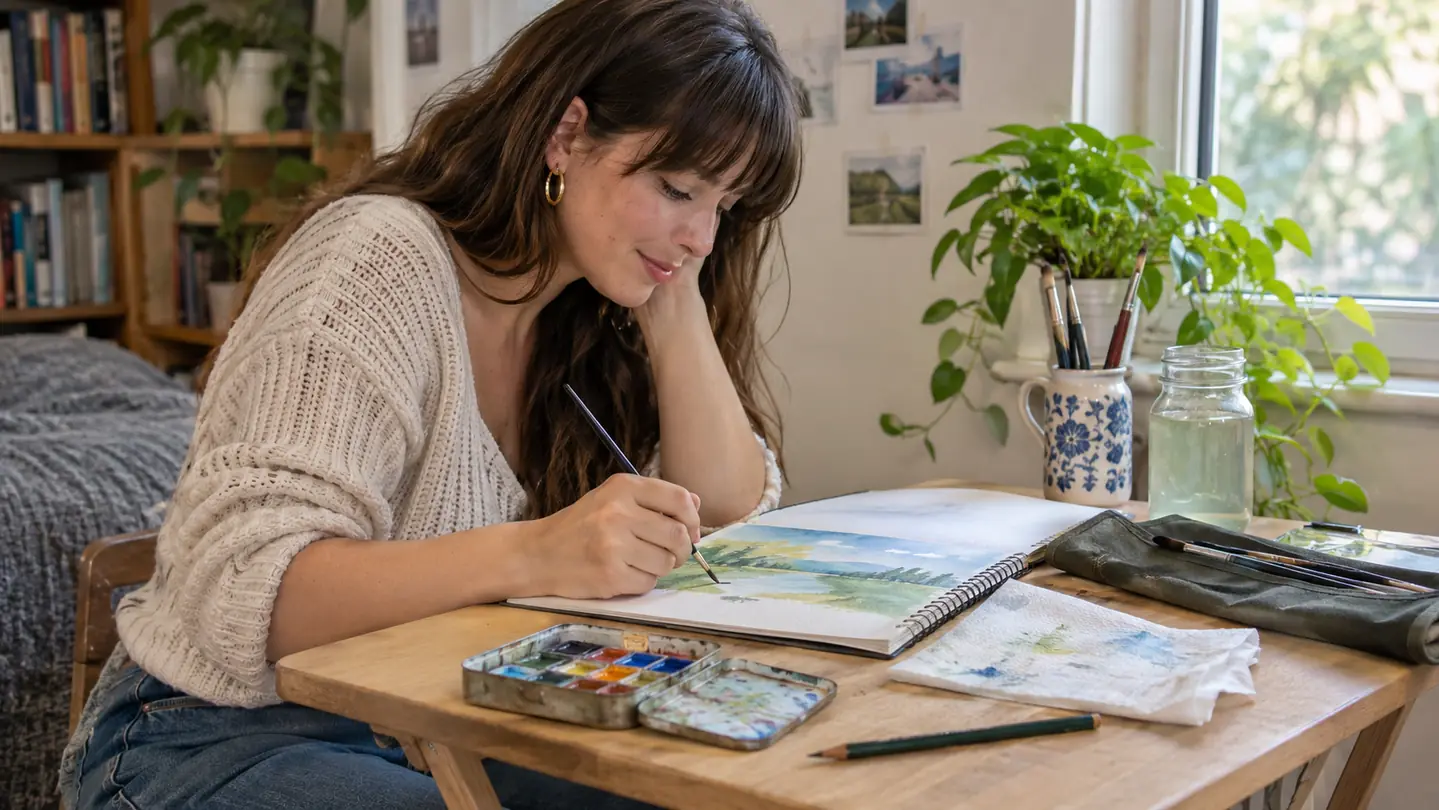
I am 64, retired after 31 years of teaching middle school art, and I paint most mornings at a folding table in the spare bedroom I turned into a studio, with the north window. I have painted in watercolor for about 22 years. The water brush is not what I use at that table. It is what I reach for when I am away from it: the park, a waiting room, my sister's kitchen up in Hagerstown. What follows is what months of that actually looks like on the paper, including the parts that still annoy me.
The Quick Verdict
A medium nylon tip on a barrel of water. It will not replace a good round brush at the studio table, but for a wash on a park bench it earns its spot in the pouch.
Amazon Check Today's Price →The brush that lives in my bag, not on my studio table
Medium nylon tip, a barrel you fill with plain water, one piece in a zip pouch. This is the one I take to the park.
Amazon Check Today's Price on Amazon →How I've Used It
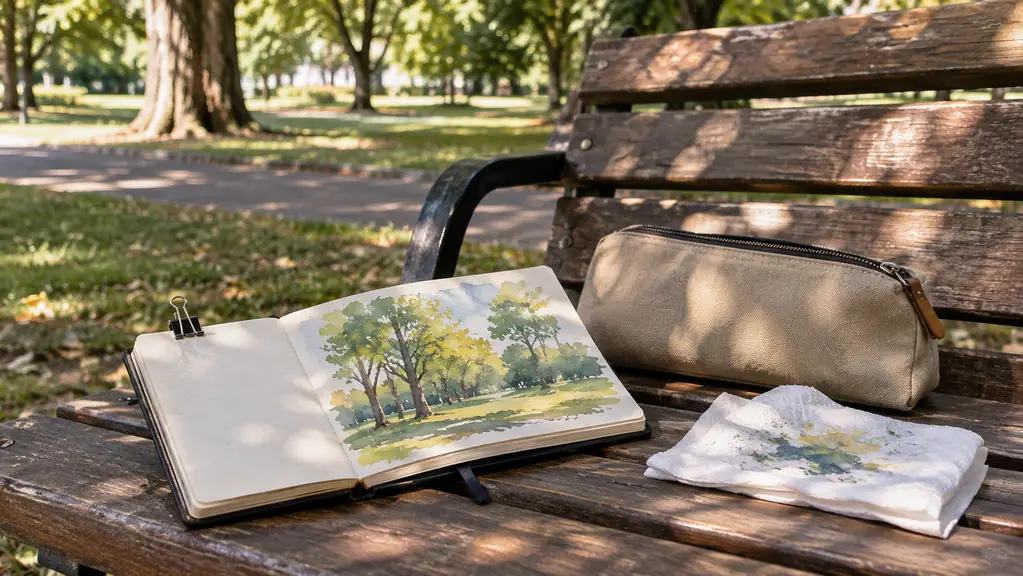
The kit is a plain zip case that lives in my bag. Inside it: a pocket sketchbook, four half pans rattling around in an old mint tin, a pencil, and this brush. I fill the Pentel barrel from the tap before I leave the house, or from a water bottle if I am already out somewhere. Then I squeeze once over a paper towel until the tip is damp and not dripping, and I start. The whole thing weighs almost nothing, which matters more at 64 than it did at 40, and it takes up less room than a paperback.
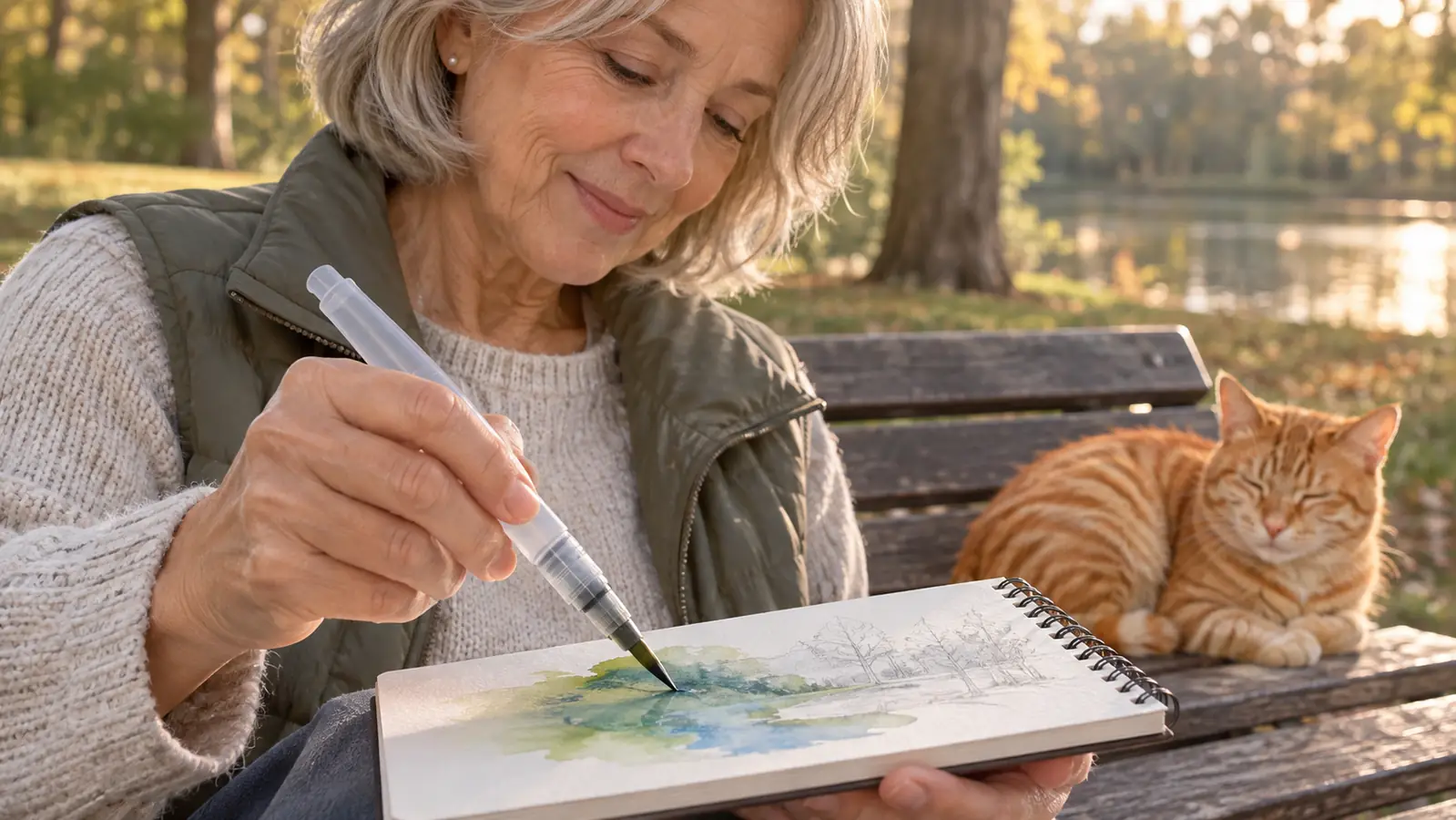
Most of what I paint with it is small. A thumbnail of a treeline. The shape of a bench and the shadow under it. Two or three garden flowers on a page with the stems suggested rather than drawn. I pencil first, lay a wash over it, then lift a few highlights back out with a clean damp tip. On a good morning at the park I fill two pages. On a bad one I fill a third of a page and eat a sandwich and watch a heron, and that is still a good morning.
One use I did not expect: I paint with it while I am waiting. There is a lab in Frederick where the wait is reliably forty minutes, and I have filled a dozen pages there. Nobody looks twice at a woman with a small book and a brush. It is a better use of forty minutes than the magazine rack, and the water has never spilled in my lap, which is more than I can say for the cup I used to bring.
The difference between this and my Transon goat hair rounds at the studio table is not subtle. Those hold a load and release it slowly, and I can shape a wash with the belly of the brush. The Aquash holds water in the barrel and lets it out when I squeeze, and that is a different kind of control entirely. It took me a while to stop fighting it. For the first month I painted everything too wet and blamed the brush, which was unfair.
Where it wins is that there is no jar. No jar to knock over on a bench, no jar to wrap in a towel in a bag, no table to protect, nothing to spill on my sister's good tablecloth. When you have spent years hauling a water container around, that is the whole argument, and it does not sound like much until you have done it the other way.
What the Medium Tip Does on Paper
The tip is nylon and it comes to a point that is honest about being a point. I can draw a stem with it, and I can also lay a wash two inches wide by pressing the side down. Medium is the size I would tell most people to start with. Fine is lovely for detail and miserable for coverage. Broad is the reverse. Medium does neither job perfectly and both jobs adequately, which is usually what you want in a bag.
Where it earns its keep with me is edges. If I paint a shape and let it sit for a minute, I can run the damp tip along the edge and pull the color outward until it fades into the paper. That is how I get a soft edge on a distant hill without wetting the whole page. At home I do the same thing with a clean damp round, but at home I have a jar. Out of the house, the barrel is the entire water supply and I plan around that.
It does not granulate. It will not give you the texture that a rough paper and a loaded round will give you, because the water comes out plain and fast rather than carrying pigment down into the valleys. What it gives you is water on demand in a place with no sink. If I want a backrun on a park bench, I wet the paper with the tip, drop in color, and tilt the book. The bloom does what blooms do, and I have learned to stop arguing with it.
One more thing about the tip. Nylon is springy, which I like for lifting and less so for laying a long even stroke. If you press hard, the tip bends and the stroke goes wide and pale at the same time. Light pressure, more passes. That is a habit worth building early, and it carries over to every other brush you own.
Filling It, Wiping It, and Changing Colors
Fill the barrel most of the way, not all the way. If you fill it to the very top and screw it back together, there is no room for the air and the first squeeze pushes water out somewhere you did not intend. I learned that in a waiting room in Frederick, on my lap. Fill it about three quarters, tighten it, point the tip at a paper towel, and squeeze until the water reaches the bristles.
Changing colors is the part beginners get wrong, and I got it wrong for months. You do not need a sink. Wipe the tip on a paper towel, squeeze a little so clean water pushes through the bristles, and wipe again. Two wipes handles a light yellow after a blue. Three for the other direction. It is not a true rinse, and a trace of the old color stays in there, which is why I paint light to dark and plan the order of a page before I start it. That is good practice anyway, and the brush simply makes it non negotiable.
The thing I still do wrong four years in is squeezing while the tip is touching the paper. That is the flood, every time. Squeeze into the air or over the paper towel, then touch the paper. If I am in the middle of a big wet area and I need more water, I lift the brush, squeeze, and come back to it. It costs one second and it has saved me more pages than I can count.
The Paper Matters More Than the Brush
I paint on Arches cold press blocks at home, 7 by 10, 140 lb, and I go through about one a month. On a block like that, the brush feels patient. The paper holds the water long enough that I can go back into an edge and soften it. On a thin student pad, the same brush and the same squeeze will buckle the sheet and dry before I can do anything with it, and then I blame the brush for something the paper did.
If you are trying this for the first time, do not judge it on copy paper or on a pad that curls the moment it sees water. Use something that can take a wash. The pocket sketchbook in my bag is a heavier stock than you would expect, and it is half the reason the kit works. A water brush on bad paper is a frustrating afternoon. The same brush on decent paper is a small pleasure.
How the Brush Holds Up Over Months
I am on my third Pentel Aquash in four years, which works out to roughly one a year with steady use. What goes first is the point. Nylon softens, and after a few months of being pressed into cold press paper the tip starts to splay and stops drawing a crisp stem. It still holds water perfectly well. It just stops being a drawing tool and becomes a washing tool, and that is when I replace it.
Nothing has cracked or come apart on me. What kills these is neglect, in my experience. Water left sitting in the barrel for weeks goes stale, and a tip left to dry hard takes a long soak to come back and never comes back all the way. I empty mine when I get home and give the tip a squeeze and a wipe, and it is ready the next time I pick it up.
The other wear point is how hard you are on the tip. Cold press paper is basically sandpaper at brush scale, and I scrub when I lift. If you are a scrubber, expect to replace it sooner. On a smoother pad it lasts longer, but then so does everything.
Squeeze into the air or over the paper towel, then touch the paper. It costs a second and saves a page.
Where It Falls Short
It is not a round brush and it does not pretend to be one. I cannot load it with a strong mix and sweep a whole sky in one pass the way I can with the largest of my Transon rounds. The barrel holds plain water, so the strength of the paint is whatever is already on the tip. When I want a dense dark I have to go back to the pan and pick up more pigment, and that is a stop in the middle of a stroke that I feel.
It also took me longer to get used to than I expected, and I want to say that plainly because most reviews skip it. For the first month I over watered everything. My early park sketches are pale and sad and have puddles near the bottom edge. If you are coming from traditional brushes, give yourself a few sessions to learn the squeeze. If you are a beginner, this is honestly an easier start than a brush and a jar, because the water is attached and there is nothing to tip over.
A student handed me a Zebra water brush once, on a Thursday, and I used it for about ten minutes on her paper. That is my entire experience with it, so take this for what it is worth. The feel was different in my hand and the tip behaved differently under pressure, and I did not like it enough in ten minutes to want to spend an afternoon with it. I am not going to draw conclusions from ten minutes. I mention it only because people ask.
What I Liked
- Water rides in the barrel, so there is no jar to carry, spill or knock over
- The medium nylon tip draws a stem and lays a wide wash with the same brush
- Wiping on a paper towel changes color in seconds, with no sink anywhere
- Slips into a zip pouch beside a pocket sketchbook and a mint tin of half pans
- Four years of steady use, three brushes, and nothing has cracked or failed
Where It Falls Short
- Squeeze while the tip touches the paper and you flood the page
- The nylon point softens after a few months and stops drawing a crisp line
- The barrel holds plain water, so you cannot control paint strength in it
- It cannot carry a heavy wash across a large sheet the way a loaded round can
Who This Is For
Adult hobby painters who want a small kit in a bag and want to paint away from the table. If you sketch in pen and like the idea of adding a wash, this is the least fussy way I know to do it. If you take a class, or you drive to see family and want something to do in the afternoon, it belongs in the pouch. It is also a fine first watercolor tool for a beginner, because the water is attached and nothing can spill.
Who Should Skip It
If you paint large, wet, whole sheet washes, this will frustrate you, and you should buy a big round and a folding water container instead. If you need a crisp point for botanical or architectural detail, a proper small round is the better tool. And if you want exact control over the water to pigment ratio at every stroke, a brush and a jar gives you more of that than a squeeze barrel ever will. None of this is a flaw in the brush. It is a different job.
The one I would put in your bag if you asked me across the table
Pentel Aquash medium, nylon tip, a barrel you fill with plain water. Start there and a pocket sketchbook on decent paper, and skip everything else for now.
Amazon Check Today's Price on Amazon →